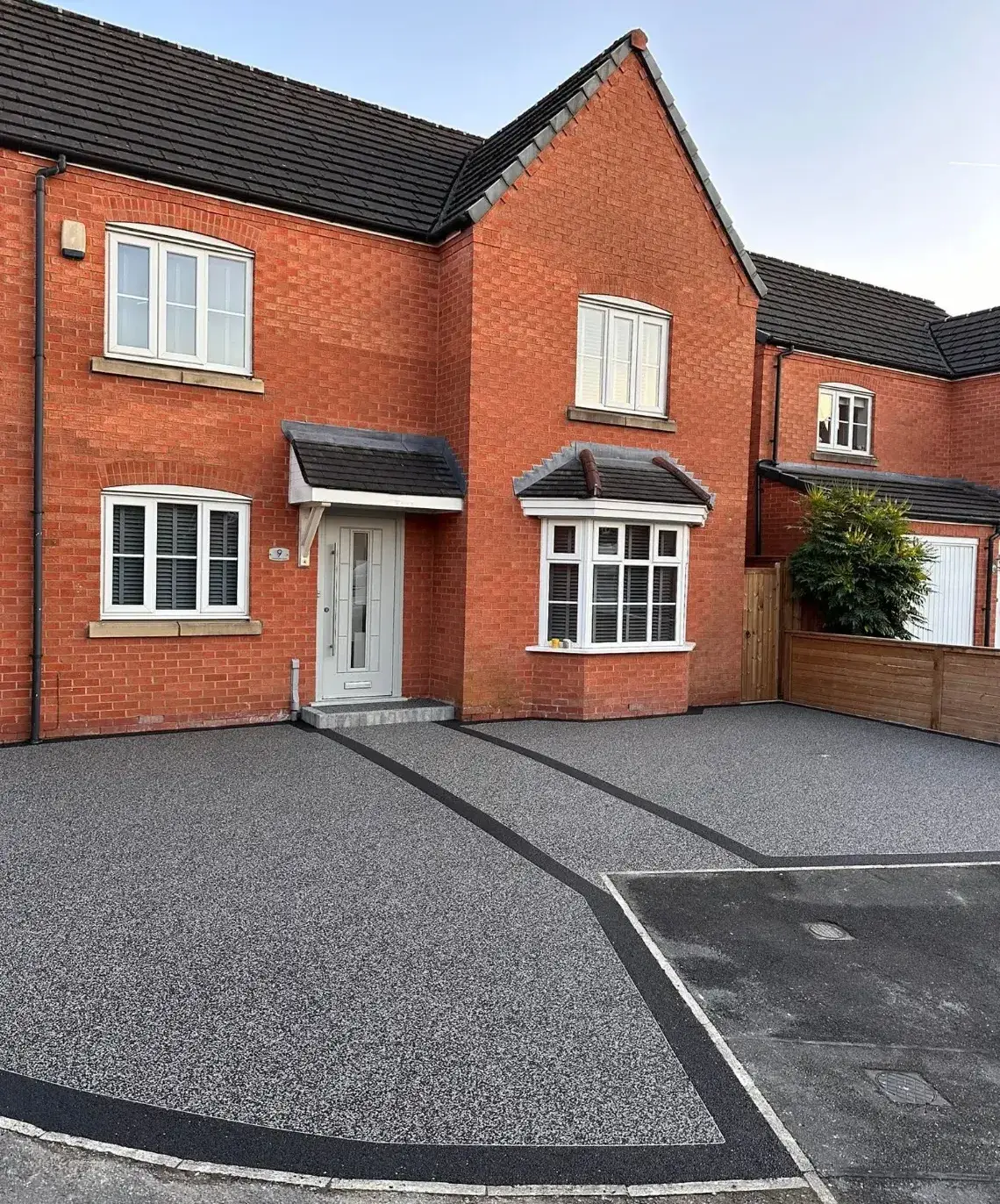
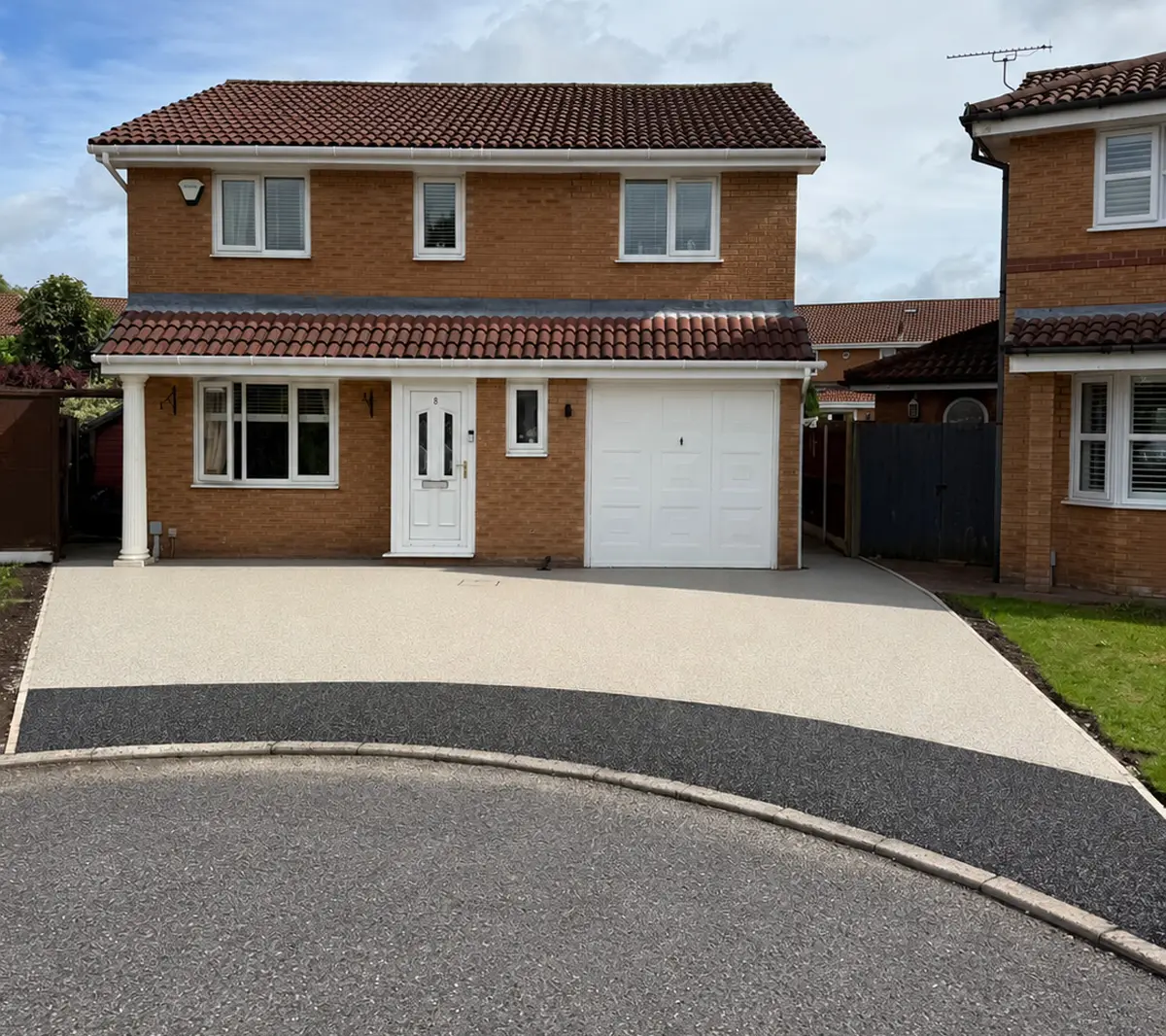
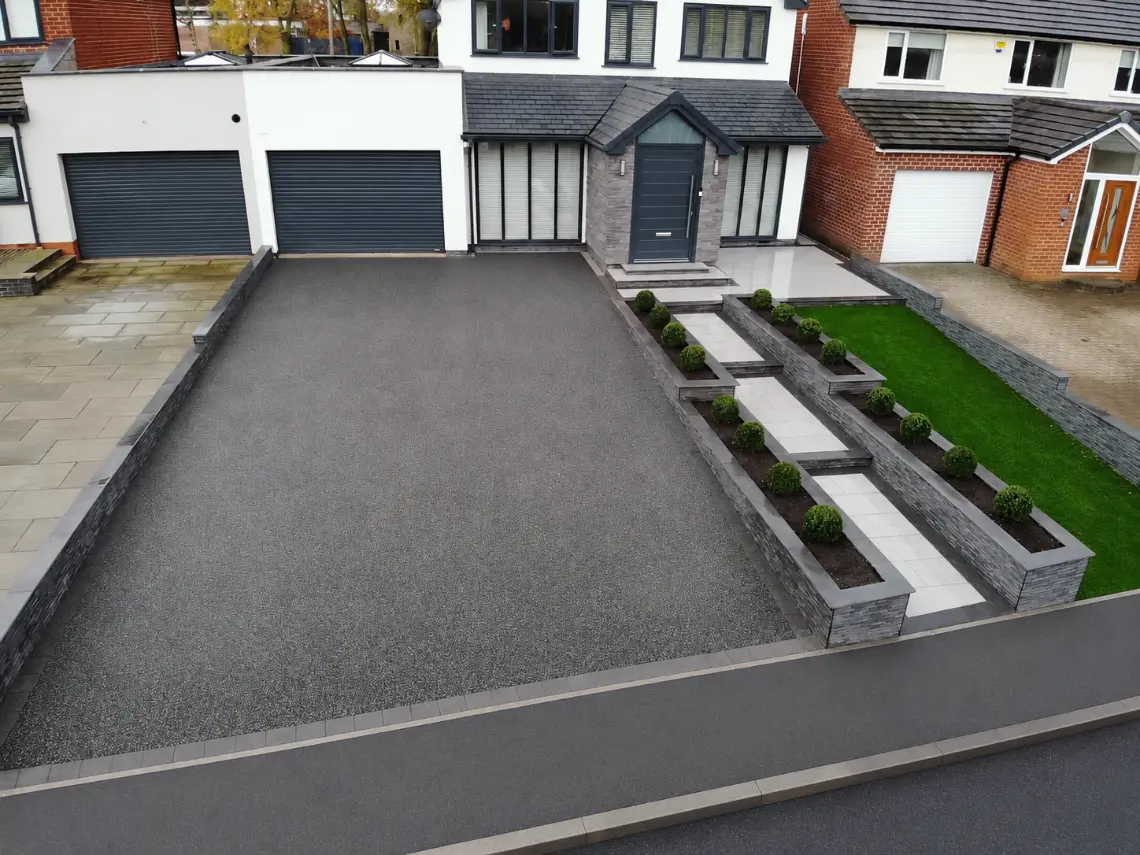
If your property sits on an incline, you may be wondering whether a resin driveway is actually a practical choice. It is a fair question, especially in parts of Wigan and surrounding areas where sloping drives, uneven ground and drainage concerns are common.
The good news is that yes, resin driveways can work very well on a slope. But there is an important catch: success depends far more on the ground preparation, drainage design, grip, edging and gradient of the driveway than on the resin surface alone. A well-installed resin bound driveway can give you an attractive, hard-wearing and permeable finish, but a poor installation on a slope can lead to long-term problems. Installer guidance commonly notes that sloped resin bound driveways are achievable, while emphasising that gradient, base condition and drainage must be assessed carefully on a case-by-case basis.
At C.G Paving Company Ltd, we speak to many homeowners across Wigan who want a driveway that looks smart, handles rainwater properly and remains safe underfoot on an incline. In this guide, we explain when resin works on a slope, when it may not be the best choice, and what to look for before going ahead.
The short answer: yes, but only when the groundwork is right
A resin bound driveway can absolutely be installed on a slope. Because the aggregate is bound together with resin, the finished surface is smooth, solid and far more stable than loose gravel. That makes it a popular option for sloping driveways where homeowners want a cleaner finish and less movement underfoot or under tyres. Installer guidance also notes that resin bound systems can be used on inclines, but the slope must be checked properly before installation.
However, not every sloped driveway is automatically suitable for resin. The real question is not just “Can resin go on a slope?” but “Is my slope suitable for a resin bound system with the correct base and drainage?” That is the difference between a driveway that performs well for years and one that causes issues after the first heavy spell of rain or frost.
Why slope matters with any driveway surface
Any driveway on an incline has to deal with extra pressure. Vehicles place more force on the surface when climbing, braking and turning. Water also moves faster downhill, which means poorly planned drainage can quickly become a problem. On top of that, safety becomes more important, especially in wet, icy or leafy conditions.
That is why a sloping driveway must be designed with the whole system in mind:
- the gradient
- the sub-base
- the drainage route
- the surface grip
- and the strength of the edges
Resin bound vs resin bonded: an important difference
When people talk about “resin driveways”, they often assume all resin systems are the same. They are not.
For sloping driveways, the system that is usually discussed is resin bound surfacing. This is where the aggregate and resin are mixed together before being laid, creating a smooth and often permeable finish. A properly designed permeable resin system can allow water to pass through the surface into a suitable base below or toward an appropriate drainage solution. Planning Portal guidance and UK government guidance both recognise permeable driveway solutions as a way to control runoff.
By contrast, resin bonded systems are different and are generally not what most homeowners want for a domestic driveway in Wigan. If your goal is a modern, porous driveway that looks seamless and handles rainwater well, you would normally be looking at resin bound.
Do resin driveways grip well enough on a slope?
One of the main concerns people have is safety. That is especially true on a sloping driveway where vehicles need traction and pedestrians need confidence underfoot.
A professionally installed resin bound driveway can offer good grip, but the slip resistance depends on the aggregate choice, texture, installation quality and ongoing maintenance. On steeper slopes, choosing the right stone blend and finish becomes even more important. Installer guidance on sloped resin surfacing repeatedly highlights anti-slip performance and aggregate selection as key factors for inclined sites.
In practical terms, that means a slope that is manageable with the right resin bound system may still need:
- a more suitable aggregate blend
- careful finishing
- proper edge restraints
- and sometimes a different design approach if the incline is severe
How steep is too steep for a resin driveway?
This is one of the most common questions, and the honest answer is that there is no single universal maximum slope that applies to every resin driveway. Different installers and systems give slightly different guidance. Some installer sources describe resin bound surfacing as typically suitable up to around 12–15% gradient — roughly around 1 in 7 — before more specialist design or alternative surfacing may be needed. Other general UK driveway guidance suggests that around 1:6 is a practical upper recommendation for many domestic driveways. These are useful rules of thumb, not a one-size-fits-all legal standard.
That means the best approach is not to rely on a generic number you found online. Instead, your driveway should be assessed on:
- the exact gradient
- the length of the slope
- whether vehicles turn on the incline
- the condition of the current base
- drainage performance
- and how exposed the driveway is to water, shade and winter conditions
For some Wigan properties, resin will be ideal. For others, a different surface or a modified design may be the smarter long-term option.
The base is everything on a sloping driveway
If there is one factor that makes or breaks a resin driveway on a slope, it is the base construction.
Even the best-looking resin finish will not last if the base underneath is weak, cracked, poorly compacted or unable to deal with water. Manufacturers and installers consistently stress that movement in the base can cause problems in the finished resin surface, and typical resin bound build-ups rely on a suitable permeable sub-base for long-term performance.
On a sloping driveway, the base has to do more than just support the surface. It also has to:
- manage water properly
- resist movement under vehicle loads
- keep the surface stable over time
- and work with the edging to hold everything in place
The base is everything on a sloping driveway
For homeowners in Wigan, drainage should never be treated as an afterthought. A sloping driveway naturally sends water downhill, so if that runoff is not handled properly it can cause puddling, washout, overspill or pressure on nearby drainage points.
One reason resin bound driveways are popular is that they can be designed as a permeable surface. UK planning guidance states that householders generally do not need planning permission for a new or replacement driveway of any size if it uses a permeable surface or directs rainwater to a lawn or border to drain naturally. The same principle appears in Wigan Council guidance for front gardens, which points householders toward permeable surfacing or drainage to a porous area within the property.
That can make resin bound especially attractive for domestic driveways, but only when the full build-up is designed properly. A permeable surface is not enough on its own if the base underneath or drainage route is wrong.
Common problems when resin is installed badly on a slope
1. Poor drainage
2. Surface movement or cracking
3. Reduced grip
4. Weak edges
5. Choosing resin when the slope is too severe
When is resin a good choice for a sloping driveway?
- the slope is moderate and properly assessed
- the driveway has a suitable base or can be rebuilt correctly
- the drainage is designed properly
- the finish is chosen with slip resistance in mind
- and the installation is carried out by an experienced team
- a clean, modern appearance
- no loose stones like gravel
- permeability when specified correctly
- low maintenance compared with some alternatives
- and a seamless finish that can suit both traditional and modern homes
When might another surface be better?
- the driveway is extremely steep
- the base conditions are poor
- water needs to be managed in a more engineered way
- or the site is subject to unusual stresses from heavy vehicles or sharp turning
What should Wigan homeowners ask before choosing resin?
Is the surface definitely resin bound?
Has the gradient been measured properly?
What condition is the existing base in?
How will drainage be handled?
What aggregate and finish will be used for grip?
Will edge restraints be installed?
Do you need planning permission for a sloping resin driveway in Wigan?
In many cases, no — not if the driveway uses a permeable surface or the rainwater is directed to a permeable area such as a lawn or border. The Planning Portal states that a new or replacement driveway of any size usually does not need planning permission if it is permeable, but if more than five square metres is covered with a traditional impermeable surface and runoff is not directed to a permeable area, planning permission is generally needed. Wigan Council guidance for paved front gardens follows the same principle.
If access to the road is changing, that is a separate issue. Wigan Council also notes that if you are considering building a driveway, you will require a dropped kerb, and you may need permission depending on the circumstances.
Final verdict: do resin driveways work on a slope?
Yes — resin driveways do work on a slope, and in many cases they work very well.
But the surface itself is only one part of the job. For a sloping driveway to perform properly, the installation must be designed around:
- the gradient
- drainage
- base strength
- slip resistance
- and the overall layout of the site
That is why the best results come from a proper site assessment, not a generic promise.
If you are looking for expert advice on resin driveways in Wigan, C.G Paving Company Ltd can assess your slope, explain your options clearly and recommend the most suitable solution for your property. Whether your driveway is gently sloped or more challenging, getting the design right from the start is what protects both the finish and the long-term value of the job.