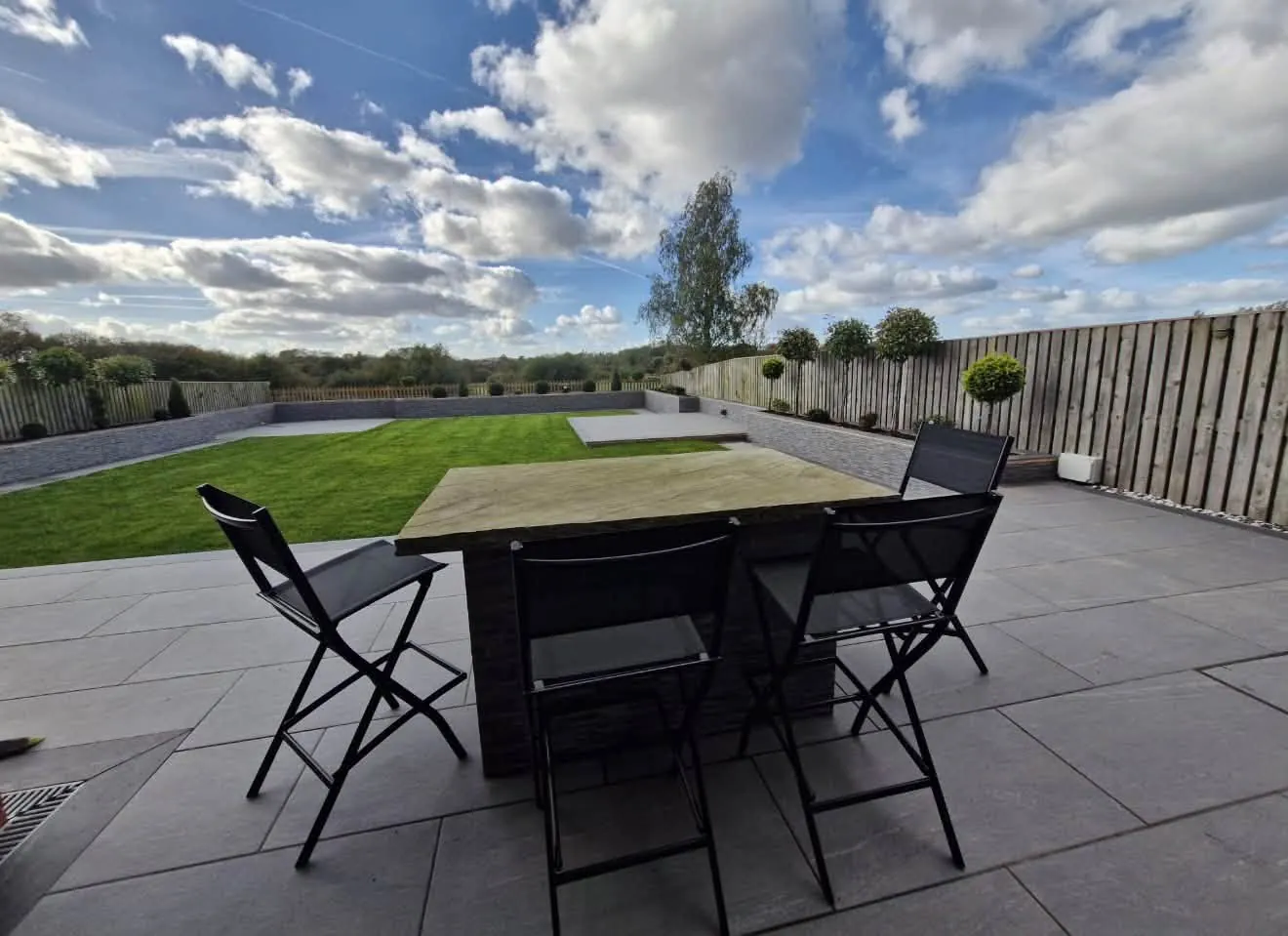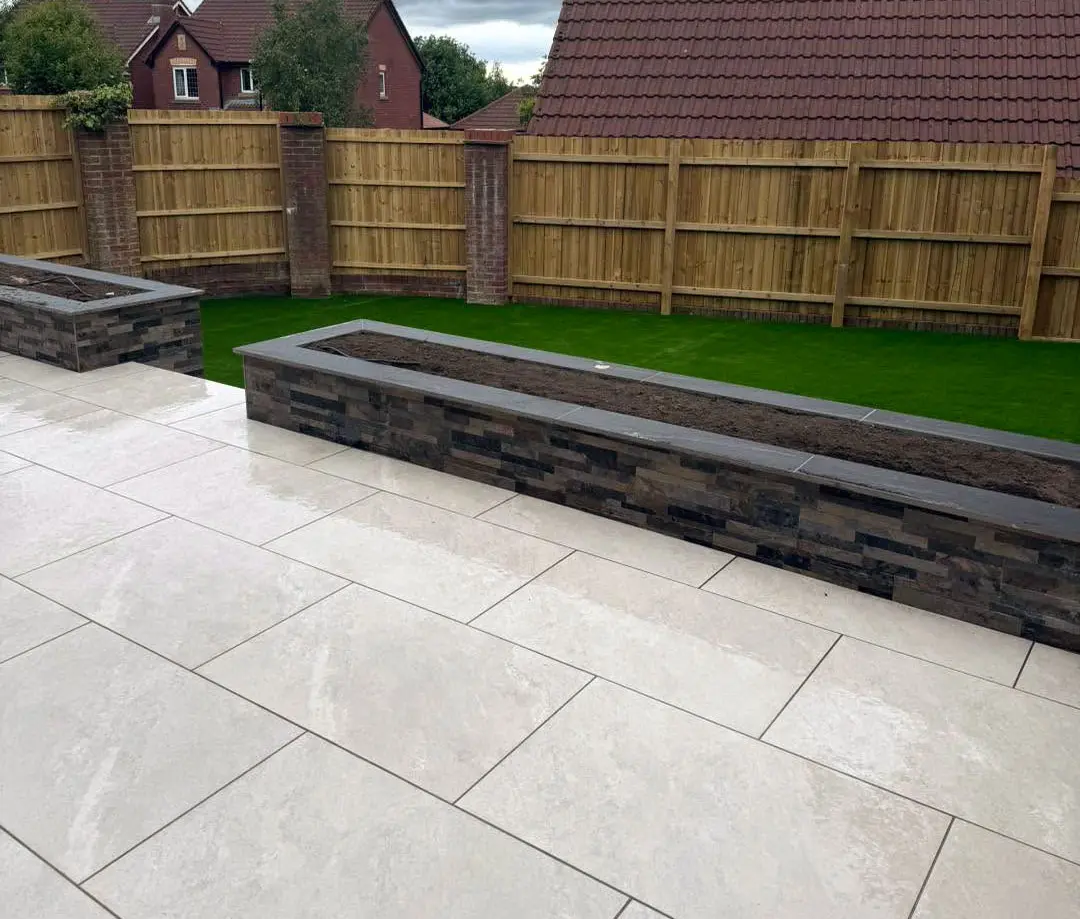
Are porcelain patios slippery when wet? It is a sensible question when planning a new garden, particularly as autumn leaves, rain and freezing temperatures arrive. A patio needs to work for everyday trips outside as well as summer meals in the sunshine.
Outdoor porcelain paving can provide good grip in wet weather, but performance depends on the particular product, its surface finish, installation and maintenance. The word porcelain alone does not tell you how a patio will perform underfoot.
At CG Paving Company Ltd, we install porcelain patios across Wigan and the surrounding areas. Here is what to consider when choosing paving and looking after it through winter.
The Short Answer: Can Porcelain Paving Be Slippery?
Yes, porcelain paving can become slippery, particularly if the finish is unsuitable for outdoor use or the surface is covered with algae, wet leaves, cleaning residue or ice. Purpose-made outdoor porcelain with suitable wet slip-resistance data can be a practical patio choice, provided the layout, drainage and upkeep are also considered. A slip-resistant finish helps manage risk. It does not make a patio slip-proof in every condition.Outdoor Porcelain and Polished Indoor Tiles Have Different Uses
Porcelain comes in different finishes. A polished tile intended for an indoor room should not be assumed suitable for a rain-exposed garden simply because it is made from porcelain. For a patio, check that the specific paving product is intended for external use and ask for its technical information. Many exterior ranges have a textured finish designed to improve grip, but appearance and texture alone are not substitutes for test data. If you want matching paving inside and outside, check the specifications for both versions. Similar colours do not necessarily mean identical surface finishes or slip performance.What Does an R11 Slip Rating Mean?
R11 is a rating commonly shown on outdoor porcelain paving. It comes from a ramp test using specified footwear and oil on the surface. It describes performance under those test conditions. Because a rainy patio involves different conditions, R11 should not be treated as a guarantee of grip in rain, frost or ice. The exact product and its intended use still matter.Why Wet Pendulum Test Results Are Useful
The pendulum test is used to assess slip resistance and produces a pendulum test value, or PTV. HSE guidance classifies a PTV of 36 or above as low slip potential under the conditions tested. For a rain-exposed patio, ask about wet test results. A dry result does not establish wet-weather performance. Steps, slopes and individual access needs also need consideration. R ratings and PTVs come from different tests and cannot be directly converted. The UK Slip Resistance Group explains the differences, while the HSE slip-resistance guide explains PTV interpretation.What Can Make a Porcelain Patio Slippery in Winter?
Even a suitable outdoor paving product needs care. Seasonal build-up can cover the surface you are relying on for grip.- Wet leaves: fallen leaves can form a slippery layer, particularly around trees and planting beds.
- Algae and moss: shaded, damp areas need attention, even where the paving itself absorbs very little water.
- Mud: soil carried from lawns, planting beds or footwear can collect on paths and patios.
- Cleaning residue: unsuitable products or inadequate rinsing can leave a film on the surface.
- Ice: frozen moisture can cover the paving texture and create a separate slip hazard.
Is Frost-Resistant Porcelain Safe to Walk on When Icy?
Frost resistance and slip resistance describe different things. Frost resistance concerns the material’s ability to resist damage from freezing conditions. It does not prevent ice forming on top. Outdoor porcelain typically has low water absorption, but moisture on its surface can still freeze. A paving slab can withstand cold weather while the ice above it remains slippery. During freezing conditions, take extra care around doorways, steps and shaded routes. Use an alternative route where possible if an area is icy. Ask your paving supplier which winter treatment is compatible with both the slabs and jointing material, and follow its instructions.How Installation and Garden Layout Affect Everyday Use
Choosing the paving is only part of planning a practical patio. Levels, falls and drainage should be designed to manage surface water and avoid unnecessary ponding. Consider the routes you use most often: the journey to the bins, the path to the garage or the steps outside the kitchen. Discuss shaded spots, existing puddles and any difficulty moving between levels before work begins. Lighting can help you see step edges and obstacles during darker evenings. It does not improve the paving’s slip resistance, but visibility is another useful part of the design. Our porcelain patio installation service can be considered alongside the wider layout of your garden.How to Care for Your Porcelain Patio Through Autumn and Winter
A simple routine helps prevent dirt and organic matter building up. Always follow the aftercare instructions for your paving and grout.- Remove leaves and loose debris. Sweep regularly, paying attention to corners and areas beneath trees.
- Check shaded areas. Deal with algae or moss using a treatment approved for your paving and joints.
- Use a suitable cleaner. Follow the specified dilution and application time, and test a discreet area first.
- Rinse thoroughly. Remove loosened dirt and cleaning residue with clean water.
- Choose suitable weather. Avoid washing the patio when the water could freeze on the surface.
- Keep drainage routes clear. Remove leaves from accessible channels and outlets, and investigate recurring puddles.
What If Your Existing Porcelain Patio Already Feels Slippery?
Start by identifying the product, if possible, and checking its wet slip-resistance information and cleaning guidance. Establish whether the problem occurs across the patio or mainly in shaded, dirty or waterlogged areas. If appropriate cleaning does not resolve the concern, ask for professional advice. Persistent ponding, uneven paving or an unsuitable finish may need assessment. For a recurring slip problem, an independent slip-testing specialist can assess the installed surface. Check with the paving manufacturer before applying an anti-slip treatment. Treatments vary and may affect appearance, maintenance requirements or product warranties.Planning a New Porcelain Patio in Wigan?
Before choosing your paving, discuss:- The product’s external-use specification and wet slip-test information.
- Steps, slopes and the access needs of people using the garden.
- Drainage, shade and areas beneath trees.
- The cleaning and winter care the surface will need.